Tension Fabric vs Air Dome Detailed
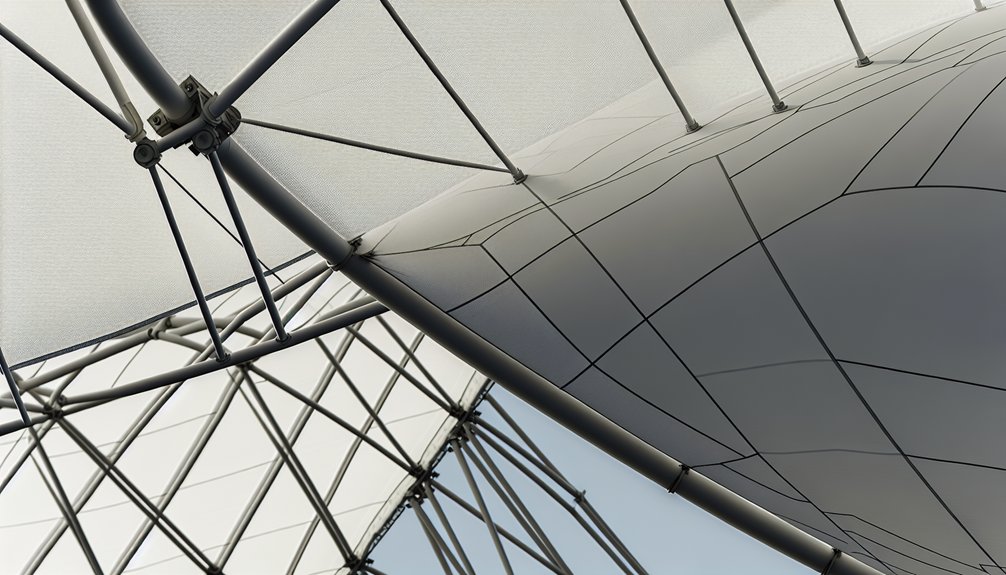
You’re facing a critical decision that’ll impact your facility’s budget for years to come. While air domes might seem like the obvious choice with their lower upfront costs, you’d be surprised how quickly those monthly operational expenses add up. The real story isn’t just about initial investment—it’s about understanding which structure type aligns with your long-term goals and operational reality. Here’s what the numbers actually reveal about your total cost of ownership.
When Fabric Structures Beat Air Domes (And Vice Versa)
When you’re weighing a 10+ year commitment, tension fabric structures offer clear advantages with their permanent frames, elimination of constant air pressure systems, and potential for operable walls that air domes simply can’t match.
The tension fabric vs air dome decision hinges on your timeline and priorities.
Choose fabric structures when you need year-round operation, want design flexibility, or require minimal ongoing maintenance. Their rigid frame vs inflatable design means no blower dependency and lower long-term operating costs.
Air domes excel for seasonal use, temporary applications, or when upfront capital is limited. They’re faster to install and cost $500,000 less initially.
However, this permanent vs seasonal comparison shifts dramatically after decade one, when fabric structures’ economic advantages become undeniable through reduced energy and maintenance expenses.
Upfront Investment: Fabric vs Air Dome Costs
Your upfront investment varies considerably between these two options, with air domes typically requiring $700K-$1.2M compared to fabric structures at $1.2M-$1.8M for a 20,000 square foot facility.
You’ll also face different installation timelines – air domes can be deployed much faster than permanent fabric structures that require substantial foundation work and frame construction.
These initial capital requirements and timeline differences directly impact your project’s cash flow and operational readiness.
Initial Capital Requirements
Two dramatically different price points separate tension fabric structures from air domes when you’re planning your initial investment.
You’ll face $1.2M to $1.8M for a 20,000 square foot tension fabric building, while air domes cost considerably less at $700K to $1.2M for the same coverage.
This fabric structure vs air supported cost difference stems from construction complexity.
Tension fabric buildings require permanent steel frameworks, concrete foundations, and extensive engineering. You’re fundamentally building a permanent structure that’ll last decades without major renovations.
Air domes offer immediate savings because they don’t need permanent foundations or complex structural systems.
You’ll get faster installation and lower upfront capital requirements, making them attractive for organizations with limited budgets or seasonal needs.
Installation Timeline Differences
Since air domes don’t require permanent foundations or complex steel frameworks, they’ll have your facility operational in 2-4 weeks compared to 6-12 months for tension fabric structures.
You’ll watch air dome installation unfold rapidly—site preparation, anchor system setup, and inflation happen consecutively with minimal delays.
Tension fabric installations involve extensive planning phases, permit approvals, and coordinated construction sequences.
You’re looking at foundation curing times, steel erection schedules, and fabric tensioning procedures that can’t be rushed.
Consider these timeline realities:
- Air dome crews arrive with pre-manufactured components ready for immediate assembly.
- Weather delays impact tension fabric construction more greatly due to exposed structural work.
- Site disruption remains minimal with air domes versus months of heavy construction activity.
If you need your facility operational quickly, air domes deliver faster occupancy.
Monthly Operating Costs: $800-$3,500 Breakdown
Monthly operating expenses between tension fabric structures and air domes vary dramatically, with fabric buildings running $800-$2,000 per month while air domes cost $1,500-$3,500 monthly.
Your tension fabric structure’s lower costs stem from its permanent frame design. You won’t need continuous blower operation, eliminating the massive energy consumption that drives air dome expenses. Basic maintenance, lighting, and occasional heating represent your primary monthly outlays.
Air domes require 24/7 blower systems to maintain structural integrity. You’ll face substantial electricity bills, often doubling or tripling fabric structure costs.
Fan motor maintenance, backup system upkeep, and higher insurance premiums add further expenses.
Over ten years, you’ll save $84,000-$252,000 in operating costs with tension fabric versus air domes, making the higher upfront investment financially advantageous long-term.
Installation Timeline: Permanent vs Seasonal Setup
When you’re planning your facility timeline, you’ll find dramatic differences between these two options.
Tension fabric structures require several months for construction due to permanent foundation work and frame assembly, while air domes can be fully operational within days of delivery.
Weather conditions will greatly impact fabric construction schedules, but they’ll barely affect your air dome’s quick inflation process.
Fabric Frame Construction Time
Although both structures serve the same functional purpose, their installation timelines differ dramatically due to fundamental design differences.
When you choose a tension fabric structure, you’re committing to a thorough construction process that creates a permanent installation.
See How It Works for Your Facility
Use our interactive configurator to design your perfect air dome, get instant pricing, and visualize your space in 3D—all in under 5 minutes.
Explore ConfiguratorYour fabric structure project typically requires 4-6 months from groundbreaking to completion. This extended timeline stems from the multi-phase construction approach:
- Foundation and structural work – Concrete footings, steel framework assembly, and anchor point installation
- Mechanical systems integration – HVAC, electrical, and lighting infrastructure permanently installed within the frame
- Fabric installation and tensioning – Precise membrane attachment and adjustment for ideal performance
While this longer timeline requires patience, you’ll gain a permanent facility that doesn’t need seasonal reinstallation.
The upfront time investment delivers decades of reliable service without recurring setup costs.
Air Dome Setup Speed
Air domes offer a dramatically different approach with their rapid deployment capability. You’ll find installation timelines greatly compressed compared to traditional construction methods. Most air dome systems can be fully operational within 2-4 weeks from groundbreaking to occupancy.
The process begins with minimal site preparation – you’re fundamentally creating a level foundation pad rather than extensive excavation work. Once the concrete pad cures, technicians can inflate and secure the dome structure in just days. This speed comes from the pre-manufactured nature of air domes, where components arrive ready for assembly.
However, you’ll need to take into account the seasonal limitations. Many air dome installations are temporary, requiring annual setup and takedown cycles. This impacts your long-term planning but provides flexibility for seasonal facilities or temporary expansions.
Weather Impact Considerations
Weather conditions greatly influence your installation timeline choices between permanent tension fabric structures and seasonal air domes.
Your tension fabric structure withstands harsh conditions year-round, requiring careful weather planning during initial construction but offering long-term stability afterward.
Air domes demand strategic seasonal timing since you’ll need ideal weather windows for installation and removal.
Consider these weather-related factors:
- Spring storms can delay air dome setup by weeks, pushing your opening schedule into peak season.
- Winter snow loads require immediate air dome deflation, leaving you without coverage during unexpected weather events.
- High wind conditions make air dome installation dangerous and nearly impossible, while fabric structures handle sustained winds once erected.
You’ll find tension fabric structures provide weather independence after installation, while air domes keep you constantly monitoring forecasts and adjusting operational schedules.
10-Year Cost Analysis: Why Fabric Wins Long-Term
When you’re evaluating these two options for a 20,000 sq ft facility, the numbers reveal a clear winner over time.
Tension fabric structures require $1.2M-$1.8M upfront but cost only $800-$2K monthly to operate.
Air domes start cheaper at $700K-$1.2M, yet they’ll drain $1.5K-$3.5K monthly from your budget.
Here’s where it gets interesting: after 10-12 years, fabric structures become the more economical choice.
You’re paying considerably less in ongoing operational expenses, primarily because there’s no need for continuous air blowers or the associated energy costs.
The break-even point occurs when fabric’s lower operating costs offset its higher initial investment.
Beyond that threshold, you’ll save thousands annually while enjoying a permanent, versatile structure that doesn’t require seasonal setup or takedown.
Design Flexibility: Operable Walls vs Quick Setup
Beyond the financial calculations lies another critical decision factor: how each structure adapts to your operational needs.
Tension fabric structures offer unmatched design flexibility. You’ll get permanent frames that accommodate operable walls, allowing you to section off areas or open entire spaces as needed. This adaptability means you can host multiple events simultaneously or adjust layouts for different seasons without structural limitations.
Air domes prioritize speed over customization. You’ll achieve rapid deployment—often within days rather than months. However, you’re locked into a fixed dome shape with limited modification options once inflated.
Consider these operational scenarios:
- Winter training camps requiring sectioned practice areas
- Multi-sport facilities needing convertible spaces
- Event venues demanding quick seasonal setup
Your choice depends on whether you prioritize long-term flexibility or immediate deployment speed.
Fabric Structure vs Air Dome Decision Framework
How do you determine which structure aligns with your specific project requirements? Start by evaluating your timeline and budget constraints.
If you need immediate coverage and have limited upfront capital, air domes offer faster installation at $700K-$1.2M versus fabric structures at $1.2M-$1.8M. However, consider long-term operational costs – air domes require continuous power for blowers, costing $1.5K-$3.5K monthly compared to fabric’s $800-$2K.
Assess your facility’s permanence needs. Fabric structures provide year-round stability with operable walls, while air domes work best for seasonal applications.
Factor in your 10-year projection: fabric structures become more cost-effective after 10-12 years due to lower operating expenses.
Choose air domes for temporary solutions or immediate needs, fabric structures for permanent installations requiring design flexibility.
Ready to Take the Next Step?
Schedule a free consultation with our experts. We'll review your site, answer your questions, and provide a detailed proposal tailored to your needs.
Book Free Consultation